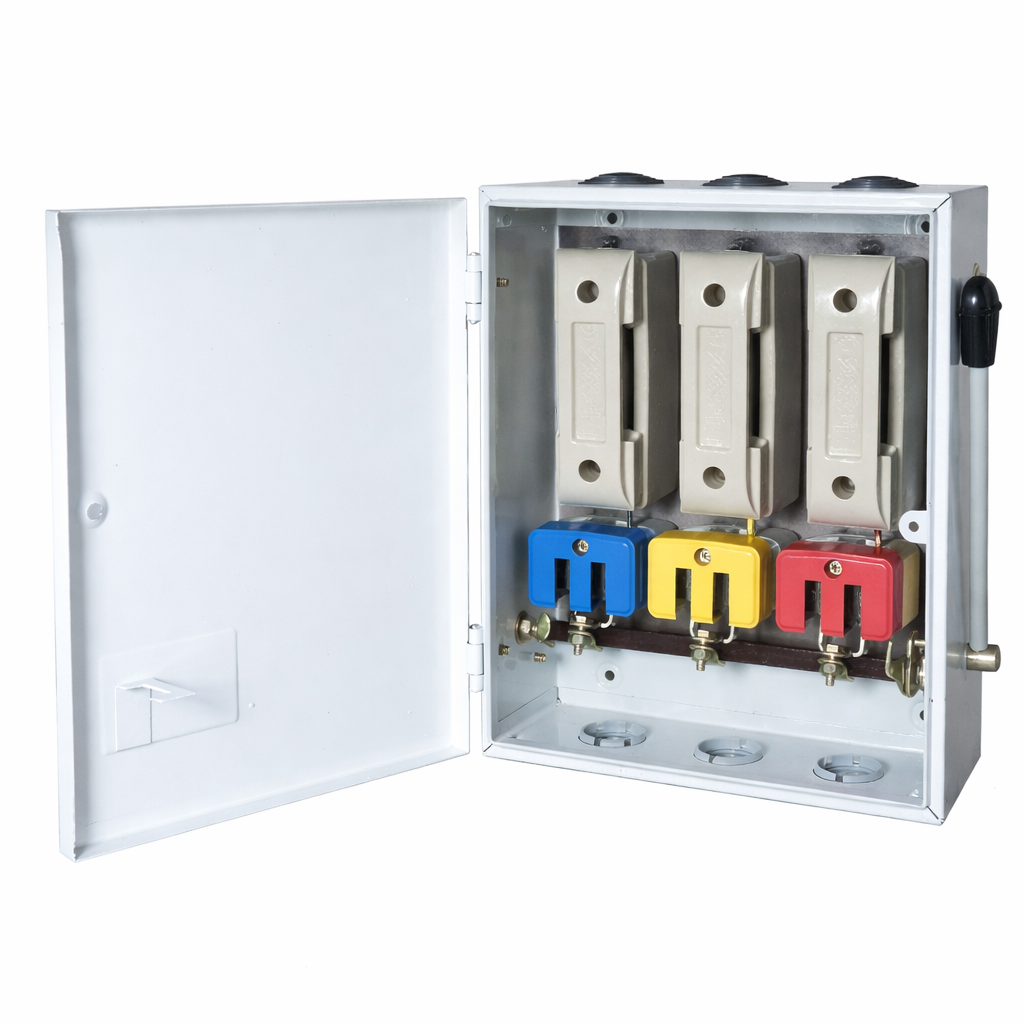
Mainswitch
A mains switch, also known as a main circuit breaker or main disconnect switch, is a crucial electrical component used to control the power supply to an entire electrical system or installation. It is typically located at the entry point of the electrical supply, either at a distribution board, switchboard, or in an industrial or residential setting.
Key Functions of a Mains Switch:
Power Isolation:
The mains switch is used to disconnect the entire electrical system from the main power supply. This is useful for maintenance, repairs, or in case of an emergency, preventing electrical hazards.
Safety:
In case of a fault (like a short circuit or overload), the mains switch can be used to shut off the electricity supply to prevent fires, electrocution, or further damage to electrical components.
Overcurrent Protection:
Mains switches often come integrated with overcurrent protection (such as a circuit breaker), which automatically disconnects the circuit if the current exceeds safe levels.
Control:
It allows the control of the entire power system from one central location, making it easier for users or electricians to manage and monitor the electricity supply.
Types of Mains Switches:
Manual Mains Switch:
A manual switch that requires human intervention to operate. This is often seen in smaller residential or commercial electrical systems.
Automatic Mains Switch (AMS):
An automatic switch that detects power failures and can automatically disconnect or reconnect power. This is typically used in critical applications where power supply continuity is important, such as in hospitals or industries with sensitive equipment.
Mains Circuit Breaker:
A circuit breaker that acts as a switch but also provides protection. It trips when excessive current is detected, preventing damage to wiring or appliances.
Fuse Switch:
A fuse switch combines a fuse and a switch in one unit, ensuring the circuit is disconnected in case of a fault (the fuse blows) and allows for manual operation when needed.
Applications:
Residential: In homes, a mains switch is used to control the electrical supply from the utility provider to the home’s circuit distribution board.
Commercial and Industrial: Mains switches are often larger and may be equipped with more advanced features to manage heavy electrical loads in factories, offices, or large facilities.
Backup Systems: In case of backup generators, a mains switch allows seamless switching between the grid supply and the backup power source.
Important Considerations:
Rated Current: The mains switch should be rated for the total current of the electrical installation. Overloading the switch can lead to failures or fire hazards.
Visibility and Accessibility: The mains switch should be easy to access and clearly marked to ensure it can be quickly operated in an emergency.
Compliance with Standards: Mains switches must comply with relevant national or international standards to ensure safety and reliability (such as IEC or UL standards).