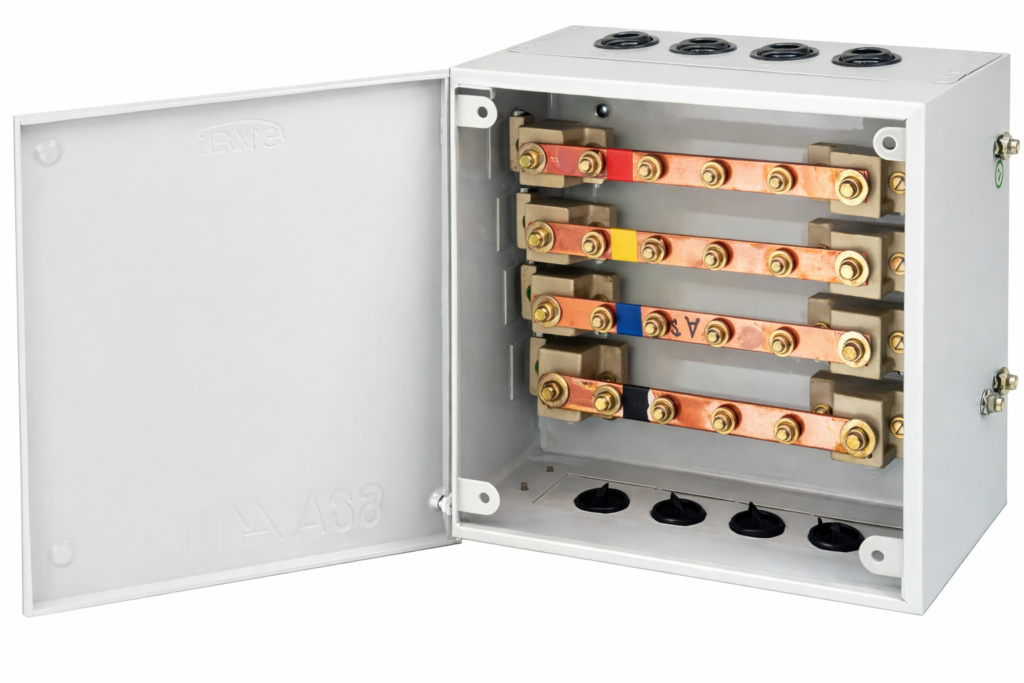
Busbar
A busbar is an electrical component that conducts electricity within a switchboard, distribution board, substation, or other electrical apparatus. It is typically a metal bar or strip that serves as a common connection point for multiple electrical circuits. Busbars are crucial for distributing power efficiently and safely.
Here’s some basic information about busbars:
Key Components and Features:
Material:
Most busbars are made from copper or aluminum. Copper is a better conductor of electricity but is more expensive, whereas aluminum is lighter and more cost-effective.
Design:
Busbars can be in the form of solid bars, hollow tubes, or strips, depending on the current and voltage ratings required.
The size and shape of a busbar are designed based on the current load it will carry, which is calculated using factors like the power system voltage, load, and safety margins.
Insulation:
In some cases, busbars are insulated to prevent accidental contact and short circuits. Insulated busbars help in ensuring safety, especially in densely packed systems.
Applications:
Power Distribution: In power distribution systems, busbars are used to connect different circuits, allowing the power to be routed from one source to many destinations.
Substations: In power substations, busbars facilitate the transfer of electrical energy between transformers and other components.
Switchboards & Control Panels: Busbars are used to distribute electricity to different circuit breakers and fuses in control panels.
Electric Vehicles (EVs): In EVs, busbars are used to distribute power from batteries to various electrical components in the vehicle.
Busbar Systems:
Single Busbar System: All circuits are connected to one busbar, providing a simple and cost-effective solution.
Double Busbar System: Uses two busbars for increased reliability. In case one busbar fails, the other can continue to supply power.
Ring Busbar System: A busbar configuration that provides multiple paths for electricity, improving reliability.
Current Rating:
Busbars are rated according to the amount of current they can carry. It’s important to select the appropriate busbar based on the total load demand.
Safety:
Busbars must be designed with adequate ventilation and cooling systems to prevent overheating. Overheating could result in failures, so current density and thermal limits are critical in selecting the right size.
Installation:
When installing busbars, they must be placed in a safe and accessible location. They should be installed with proper support structures and secured connections to avoid mechanical stress or electrical faults.
Types of Busbars:
Open Busbar: Involves visible copper or aluminum bars, typically used in industrial settings.
Insulated Busbar: The busbar is covered with insulation to protect against accidental contact.
Compact Busbar: Used in confined spaces, where multiple circuits are connected, often in a more compact form for higher density.
Conclusion:
Busbars are essential for the efficient distribution of electricity in various systems, including commercial, industrial, and residential power systems. Their selection depends on the current load, system voltage, and environmental factors.